Which functions does a modern WMS really need to provide? Discover how PROLAG One helps medium-sized businesses with standardized core processes, a SaaS-based approach and rapid usability.
A warehouse management system (WMS) should simplify warehouse operations – not add complexity. Yet many medium-sized companies face the same challenge: They need greater visibility, efficiency and digitalization across their warehouse processes while avoiding lengthy implementations and excessive demands on internal resources.
The key question is therefore not how many functions a WMS can theoretically offer, but which WMS functions a company truly needs to manage its warehouse processes reliably and efficiently? This is exactly where PROLAG One comes in. Instead of overwhelming users with unnecessary complexity, the solution focuses on standardized core processes, rapid usability and the functionality that matters most in daily warehouse operations. From goods receipt and inventory management to order picking, inventory counting, packing and shipping.
A WMS should not be evaluated based on how much it can theoretically do, but on how well it meets a company’s actual requirements.
Why “more functions” is not automatically better
When selecting a WMS, it is easy to assume that a larger function set automatically means a more capable solution. In reality, the number of functions is not always the decisive factor. A highly sophisticated WMS can be useful when warehouse processes are highly complex, heavily customized or require advanced automation. For many medium-sized businesses, however, the priority is different. They need a solution that reliably covers the core processes, can be implemented quickly and remains intuitive and easy to use in day-to-day operations.
In fact, too many specialized functions can create more complexity than value:
- Implementations become longer and more resource-intensive
- Decision-making and alignment across teams take longer
- Training requirements increase
- Processes become more difficult to understand
- Internal IT and logistics resources are increasingly tied up
A WMS should therefore not be evaluated based on how much it can theoretically do, but on how well it meets a company’s actual requirements.
What a WMS should deliver for medium-sized businesses
For medium-sized companies, success depends on achieving the right balance between functionality, predictability and day-to-day usability. A good WMS does not need to cover every conceivable special requirement. However, it should reliably support core warehouse processes and make information available exactly where it is needed.
Key requirements include:
- Transparent inventory levels
- Clear, digital process guidance
- Efficient order picking
- Traceable goods movements
- Mobile support for warehouse operations
- Intuitive usability for employees
- Quick access to relevant KPIs
- Predictable implementation without unnecessary project complexity
These requirements form the foundation of a powerful yet appropriately scaled WMS.
Key WMS functions at a glance
PROLAG One focuses on the core processes that are critical in many warehouse operations on a daily basis. These functions lay the basis for structured and fully digital warehouse management.
1. Goods receipt
The starting point for reliable inventory
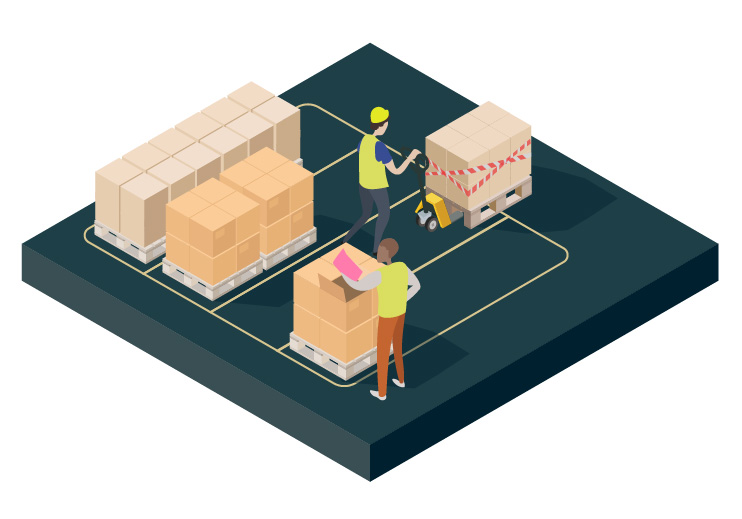
Goods receipt is one of the most critical processes in a warehouse. If incoming goods are not recorded accurately, errors can quickly spread throughout the entire supply chain. A WMS streamlines the goods receipt process by systematically capturing incoming inventory, maintaining accurate stock records and preparing subsequent warehouse processes.
Benefits for companies:
- Fewer manual data entry errors
- Faster receiving and processing of incoming goods
- Improved inventory transparency
- Reliable foundation for downstream warehouse processes
2. Inventory management
Knowing what’s in your warehouse
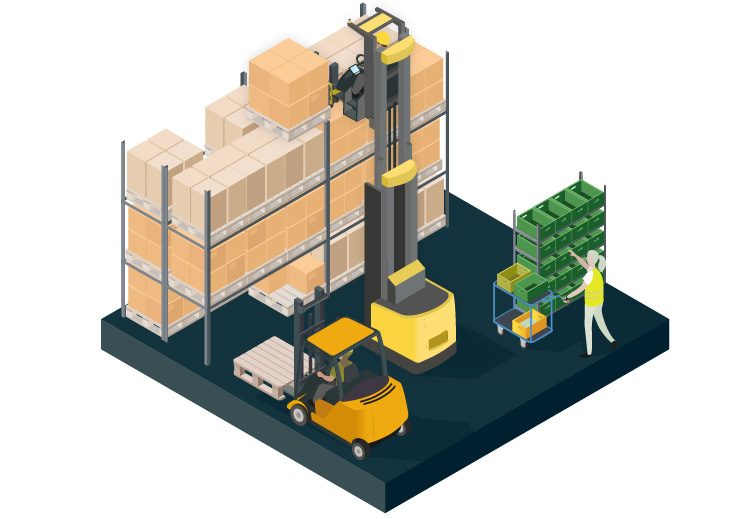
As businesses grow, spreadsheets, basic ERP functionality and manual tracking methods often reach their limits. What matters is not simply that inventory exists, but that it is managed in a reliable, up-to-date and fully traceable way. Digital inventory management creates full transparency across articles, quantities and storage locations.
Benefits for companies:
- Real-time visibility into inventory levels
- Better control and tracking of inventory movements
- Less time spent searching for products in the warehouse
- Greater confidence in operational decision-making

3. Efficient order picking
Faster, more accurate fulfillment
Order picking is one of the most time-critical activities in the warehouse. Picking errors can have a direct impact on delivery quality, customer satisfaction and the amount of rework required. A WMS supports warehouse staff in processing orders in a structured and efficient way, ensuring that articles are picked in a traceable and controlled manner.
Benefits for companies:
- More streamlined order processing
- Fewer stock retrieval errors
- Improved process guidance for warehouse staff
- Greater transparency in terms of order status
4. Inventory counting
Controlled verification of stock levels
Inventory counting is often time-consuming and ties up significant staff resources. Digital tools help streamline and structure stock verification, providing a stronger foundation for accurate and traceable results.
Benefits for companies:
- More structured inventory processes
- Improved traceability
- Reduced manual data handling and fewer media discontinuities
- Higher inventory data quality

5. Packing area
Accurate order completion
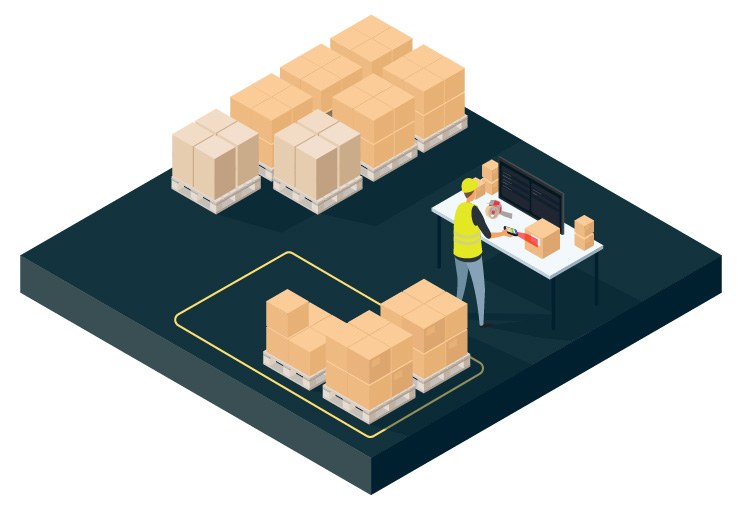
The packing area is the final checkpoint in ensuring that processed orders are correctly prepared for shipment. Errors at this stage can quickly result in customer complaints, rework or delivery delays. A WMS helps standardize packing workflows and ensures that orders are completed accurately and consistently.
Benefits for companies:
- Structured packing processes
- Fewer errors during order completion
- Better integration between picking and shipping processes
- Greater process reliability
6. Shipping
Managing warehouse processes through to goods issue
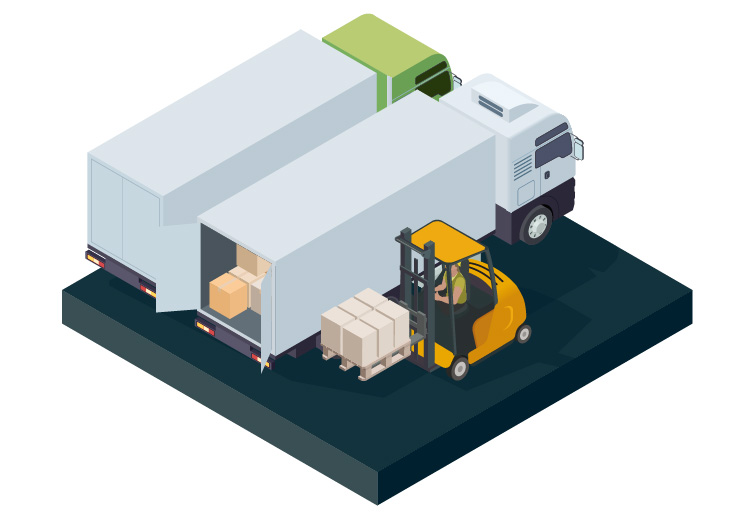
Shipping is the final operational step in the warehouse process. At this stage, orders must be transferred to goods issue completely, accurately and with full traceability. A WMS supports this by digitally managing shipping processes and providing better visibility into order status throughout fulfillment.
Benefits for companies:
- Clearer goods issue processes
- Improved traceability of orders
- Reduced coordination effort
- Greater transparency in shipping
Why standardization can be an advantage
Standardization in software is sometimes viewed critically, as companies may fear that standardized processes reduce flexibility. However, when implementing a WMS, standardization can be a significant benefit – especially where the goal is to digitalize core warehouse processes quickly and effectively.
Standardized core processes help keep implementation manageable. Instead of redesigning every workflow from scratch, companies can build on proven process logic. This reduces coordination effort, simplifies training and enables faster adoption in day-to-day operations.
SaaS, browser and mobile processes: Why technical simplicity matters
Beyond functional scope, technical usability also plays an important role. Powerful warehouse management software should not only fit operational requirements but also be easy to access and use in day-to-day operations. PROLAG One is a SaaS solution and runs entirely in the browser, which simplifies onboarding and reduces technical barriers. Mobile warehouse processes are supported via PROLAG Go, enabling employees to complete tasks directly on the warehouse floor.
This is particularly relevant for companies that need to use their IT resources efficiently. Instead of building an unnecessarily complex system landscape, they benefit from a solution designed for rapid usability and clearly defined processes.
The right WMS does not need to do everything – it needs to do the right things well
A warehouse management system should not overwhelm companies with unnecessary complexity. What matters is that the solution reliably supports the relevant warehouse processes, is quick to deploy and delivers tangible value on a day-to-day basis. PROLAG One follows exactly this approach: Maximum functionality for essential processes, standardized workflows and a strong focus on rapid usability. For medium-sized companies, this results in warehouse management software that enables professional warehouse operations without the need for an oversized or overly complex WMS implementation project.
Would you like to know which WMS functions your business really needs?
Learn more about PROLAG One and discover how to digitalize your warehouse management using standardized core processes with minimal effort.